Showing Posts From
Microservices

-
 BinaxPay Team
 - 15 Feb, 2026
- 3 mins read
Why Our Modular Architecture Makes BinaxPay Future-Proof
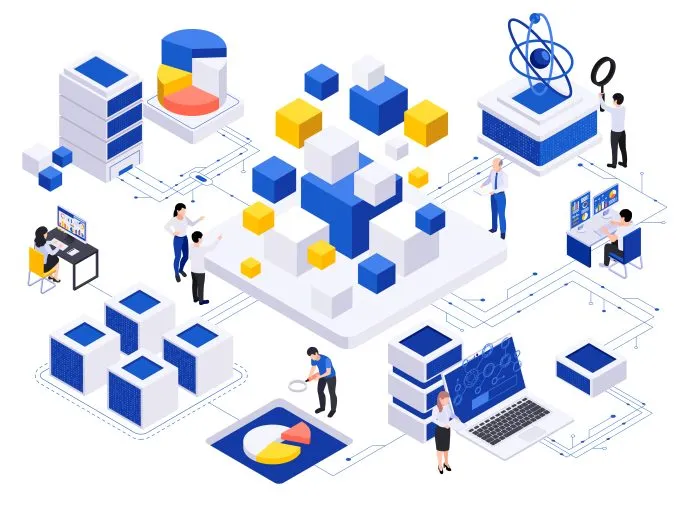
BinaxPay is engineered on a modular architecture designed for long-term scalability, rapid global expansion, and unstoppable operational resilience. Instead of building a single monolithic banking system, BinaxPay uses independent components, each capable of evolving, upgrading, scaling, or being replaced without affecting the others. This is the core reason BinaxPay can enter new markets quickly, launch new products without downtime, integrate new partners on demand, and stay technologically relevant for decades. 1. Independent Modules That Scale Without Limits Each core function operates as a separate module:Accounts and wallets Ledger FX engine Compliance engine Mobile money layer Card issuing layer Merchant engine ERP tools Treasury and liquidity API layer Partner dashboards AI behavioral riskWhy it matters: If one module needs improvement, nothing else breaks. Real example: When adding a new mobile-money integration in Uganda, the rest of the system stayed untouched, no downtime, no rebuild. 2. Easy to Enter New Countries New countries only require adding:A local treasury pool Local payment connectors (mobile money or bank rails) Local KYC rules Corridor FX pricingThe core system stays the same. Real example: When expanding into Brazil, BinaxPay added BRL as a local currency module and connected it to the treasury engine, no global reconfiguration required. 3. Zero Downtime for Product Upgrades New features can be added without stopping the system:New card programs New payment rails New compliance rules New dashboards New API endpoints New business toolsEach module updates independently. Real example: A new invoice module for SMEs was added while thousands of users were transacting, no interruptions. 4. Faster Innovation Cycles Because modules are isolated, development teams can work in parallel. Benefits:More updates Faster changes Easier testing Independent deployments Shorter release cyclesReal example: While the compliance team updated risk rules, the ERP team launched a new payroll module simultaneously. 5. Multi-Region Flexibility Built In Different regions have different rules:Africa uses mobile money EU relies on SEPA UK uses Faster Payments US uses ACH and real-time rails LATAM has local bank APIs Asia uses mixed PSP and wallet systemsA modular system adapts instantly. Real example: To launch in Mexico, only the local PSP module and KYC rule-set were added, no impact on existing corridors. 6. Easy Integration With Any Partner Partners can integrate only the modules they need:Wallets Payouts FX Merchant tools ERP Card issuing Dashboards KYCThey do not need the full platform. Real example: A logistics company integrated only payouts and FX into their app, no need for full banking capabilities. 7. Lower Cost and Higher Efficiency A modular system reduces:Maintenance cost Downtime cost Integration cost Infrastructure waste Upgrade complexityReal example: Instead of rebuilding compliance for each corridor, BinaxPay simply plugs in country-specific AML modules. 8. Continuous Adaptation to Regulations When regulations change, only the affected module is updated. Examples:New AML rule: update compliance module New FX rule: update corridor pricing engine New card requirement: update card issuing moduleReal example: A new EU AML requirement was integrated at the module level in hours, no system-wide patch needed. 9. Perfect Foundation for AI and Automation Modularity allows AI agents to plug into each module:AI risk engine AI treasury optimizer AI pricing optimizer AI fraud detection AI ERP insightsReal example: AI detects unusual patterns in the ledger while another AI module optimizes liquidity. 10. Future-Proof for New Technologies Because modules operate independently, the system can easily support:Central bank digital currencies (CBDC) Blockchain integrations New real-time rails New card networks New regulatory frameworks Government digital ID systems Quantum-safe encryptionReal example: A government ID integration was added as an independent module in a single sprint. Conclusion BinaxPay's modular architecture is what makes the platform future-proof. It allows fast expansion, instant upgrades, multi-region flexibility, deep integration capabilities, unstoppable uptime, and cost-efficient innovation. This architecture ensures that BinaxPay can evolve continuously and stay competitive as global finance transforms over the next decade.
- BinaxPay Team
- 18 Dec, 2025
- 4 mins read
Microservices, Cloud Infrastructure & Scaling Terms
A practical guide to the core technical concepts behind scalable fintech infrastructure, with clean definitions and a real-life example relevant to operations in the EU, USA, Sweden, Germany, Brazil, Saudi Arabia, and Oman. 1. Microservices Architecture Microservices means breaking a large system into many small, independent services. Each service runs separately and has one primary job. Examples of microservices include KYC service, payments service, FX engine, card issuing service, notifications service, and ledger service. Why fintechs use microservices Faster development, no full-system downtime, independent scaling, easier upgrades, and better fault isolation. If the card service fails, the ledger still works. 2. Monolith vs Microservices Monolithic system: one big codebase, slow to update, risky to scale, one bug can break everything. Microservices: multiple small services, deploy independently, scale independently, safer and faster. Modern fintechs choose microservices. 3. Containers (Docker) A container is a lightweight package that contains code, libraries, and dependencies. It runs the same everywhere: developer laptop, cloud infrastructure, production servers. Docker eliminates "works on my machine" issues. 4. Orchestration (Kubernetes / K8s) Kubernetes manages containers automatically: scales services, restarts crashed containers, balances traffic, and manages deployments. It ensures your system stays online. 5. Auto-Scaling Auto-scaling automatically increases or decreases computing resources based on load. Examples include payment traffic spikes, card transactions increase, merchant payout rush, and end-of-month payroll processing. Auto-scaling prevents downtime and reduces cost. 6. Load Balancers A load balancer distributes traffic across multiple servers to avoid overload, ensure faster responses, and keep the system stable. Fintechs use them to manage high-volume transaction loads. 7. Cloud Infrastructure (AWS, Google Cloud, Azure) Fintechs run on cloud platforms for global availability, fast scaling, secure storage, uptime SLAs, and reliable backups. Typical fintech services on cloud include databases, KYC engines, card systems, ledger and settlement engines, and reporting dashboards. 8. Horizontal vs Vertical Scaling Vertical scaling adds more power to a single machine (RAM, CPU). Horizontal scaling adds more machines to handle load. Fintechs rely on horizontal scaling for millions of transactions. 9. Service Mesh (Istio, Linkerd) A service mesh controls communication between microservices and handles encryption between services, retries, routing, and traffic control. This increases performance and security. 10. High Availability (HA) High availability means no downtime, redundant servers, and multi-zone deployments. If one region fails, another takes over instantly. 11. Fault Tolerance Fault tolerance ensures the system continues working even when a microservice crashes, a database node fails, or a data center goes offline. This is critical for fintech reliability. 12. Redundancy Redundancy means having spare systems ready. Examples include secondary database, backup KYC provider, duplicate FX engine, and alternative SMS or email providers. If one fails, the other activates. 13. CDN (Content Delivery Network) A CDN speeds up delivery of apps, dashboards, and websites. It is used for fast customer experiences globally. 14. Queue Systems (RabbitMQ, Kafka, SQS) Queues are used when payments need background processing, card operations must be sequenced, KYC verification returns slow results, or settlements must be processed safely. Queues prevent system overload. 15. Caching (Redis, Memcached) Caching stores frequently used data for fast access: recent FX rates, user session data, API token validation, and recent transactions. Caching reduces load on databases. 16. Databases (SQL vs NoSQL) SQL (PostgreSQL, MySQL) used for financial records, ledger, balances, and regulated data. NoSQL (MongoDB, DynamoDB) used for logs, analytics, and high-speed queries. Fintechs usually mix both. 17. CI/CD Pipelines CI/CD automates testing, deployment, and updates, allowing fintechs to release new features every day without downtime. 18. Observability: Monitoring, Logging, and Alerts Fintechs monitor transaction failures, API errors, system load, latency, and fraud patterns. Tools include Grafana, Prometheus, Elastic, and Datadog. 19. Disaster Recovery (DRP) A DRP ensures the system can survive data loss, region outage, or cyberattacks with daily backups, geo-replication, and secondary systems. 20. Real-Life Example (Germany to USA to Saudi Arabia Scaling Scenario) Scenario: A BinaxPay feature goes viral in Germany, causing a traffic spike. Step 1: Microservices handle load. Payments, KYC, and card issuing services scale independently. Step 2: Auto-scaling activates. Kubernetes adds more containers for the Payments API and Ledger services. Step 3: Load balancers distribute traffic. Incoming requests from Germany and USA are routed evenly. Step 4: Database scaling. Primary database in Frankfurt handles writes, read replicas in Virginia (USA) and Riyadh (Saudi Arabia) serve traffic locally. Step 5: Queue systems process high-volume payouts. Kafka queues keep the system stable during spikes. Step 6: Real-time monitoring triggers alerts. Ops team sees the surge but system stays stable due to auto-scaling. Result: zero downtime, instant settlement, global users unaffected. This is how a modern fintech uses microservices and cloud scaling to operate reliably across continents.