
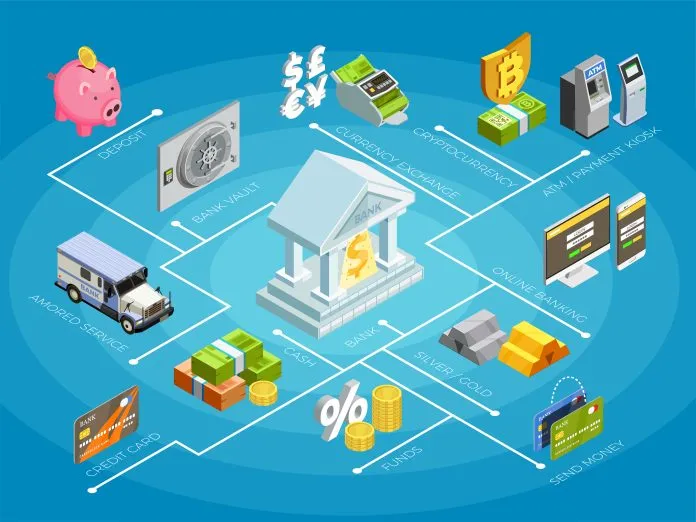
The global financial system is undergoing a structural redesign, and the core of this transformation is the shift from monolithic banking systems to fully modular, API-driven, cloud-native architectures. Traditional banking infrastructure, built decades ago, was never designed for digital onboarding, instant payments, global markets, AI-driven compliance, or multi-country expansion. As the world moves toward real-time financial ecosystems, modular banking has become the new global standard, and every major financial institution is now racing to adopt it.
Modular banking refers to a system where every function, accounts, payments, cards, FX, compliance, lending, onboarding, and even ERP, operates as an independent module. These modules can be activated, upgraded, scaled, replaced, or customized without affecting the rest of the system. This design is not just modern; it is necessary for the future of global finance.
1. Traditional Banking Architecture Cannot Support Modern Needs
Legacy banks operate on monolithic cores that are slow, expensive to modify, and extremely difficult to scale. A single change can take months, impacting the entire system. This makes innovation nearly impossible and severely limits expansion into new markets.
Modular banking solves this by breaking the infrastructure into independent layers:
- Core ledger
- Onboarding and KYC
- Card issuing
- Payments
- Compliance engine
- FX and treasury
- Merchant acquiring
- ERP and business tools
- AI and automation
- API gateway
Each module evolves at its own pace, without creating downtime or operational risk.
2. Faster Launch, Faster Innovation, Faster Scaling
Modular banking allows new products, markets, and features to go live in weeks, not years.
Example: A partner wants to launch a remittance corridor, add mobile money, or activate merchant acquiring. In a modular system, this is simply enabling a module, configuring it, and connecting local rails through APIs. There is no need for:
- Rewriting core infrastructure
- Rebuilding compliance systems
- Changing ledger logic
- Negotiating months of integration
This speed is crucial for global expansion, especially in high-demand markets across the U.S., Africa, the Middle East, Asia, and Latin America.
3. Regulatory Compliance Requires Modular Flexibility
Regulators now demand:
- Continuous KYC
- Real-time AML
- Sanctions screening
- Fraud monitoring
- Risk scoring
- Data privacy
- Country-specific rules
- API reporting
A monolithic system cannot adapt quickly enough.
Modular banking allows each country, partner, or regulatory environment to have its own compliance layer, customized and updated independently.
This gives BinaxPay the ability to operate in multiple jurisdictions simultaneously while maintaining EU and UK level compliance standards.
4. Banks, Fintechs, and Governments Prefer API-First Infrastructure
Modern financial ecosystems rely on interoperability. APIs allow systems to communicate instantly, enabling:
- Cross-border payments
- Mobile money integrations
- Merchant systems
- Remittance corridors
- Tax and government systems
- ERP and business applications
- Card networks
- KYC and KYB providers
A modular API-first approach allows BinaxPay to integrate:
- Local payment rails
- Digital currency infrastructure
- National ID systems
- Government portals
- Enterprise systems
This flexibility is impossible with monolithic architecture.
5. Modular Banking Supports High-Cash, High-Growth Markets
Emerging economies require banking systems that can:
- Handle large cash populations
- Integrate mobile money
- Support low-cost remittance
- Operate with inconsistent infrastructure
- Scale fast when usage grows
- Adapt to local regulations
- Serve both banked and unbanked populations
A modular system adapts to each local environment without redesigning the entire platform.
This is exactly why BinaxPay’s structure is ideal for Uganda, Nigeria, Ghana, Kenya, South Africa, India, Brazil, UAE, Turkey, Indonesia, and dozens of rapidly growing markets.
6. Lower Cost, Higher Efficiency, and No Legacy Limitations
Traditional banking systems are extremely expensive to maintain and upgrade. Modular banking reduces costs dramatically by:
- Removing legacy constraints n- Decentralizing development
- Enabling microservice scaling
- Automating compliance
- Using modern cloud infrastructure
- Reducing operational overhead
This allows BinaxPay and its partners to deliver banking, payments, and ERP services at lower cost and higher profitability.
7. The Future of Finance Is an Ecosystem, Not a Single Product
The financial sector is shifting toward multi-function platforms where users expect:
- Accounts
- Payments
- Cards
- Remittance
- Merchant tools
- ERP
- Payroll
- AI automation
Modular banking enables this unified approach by allowing different modules to interconnect seamlessly.
BinaxPay’s ecosystem is built with this future in mind:
- Banking and payments
- ERP and business tools
- Merchant systems
- AI and compliance
- FX and treasury
- Mobile money
- Government integration
Everything works together, but each system remains independent and upgradeable.
8. Why Modular Is the New Global Standard
The world’s major regulators, financial institutions, and fintech leaders agree: the future of banking is modular, API-first, cloud-native, and compliance-automated.
This new standard enables:
- International scalability
- Near-instant deployment
- Multi-country compliance
- Rapid innovation
- Cheaper operations
- Stronger security
- AI-driven intelligence
- Seamless integration with government and enterprise systems
BinaxPay’s architecture is built fully around these principles, allowing us to operate as a global financial infrastructure provider.
We are not limited by legacy banking systems, and we do not carry the constraints that slow traditional banks. Our modular ecosystem allows us to expand into new markets, onboard new partners, and deliver advanced financial tools with unmatched speed, security, and precision.
This is why modular banking is not just the new trend. It is the new global standard, and BinaxPay is built exactly for this future.