
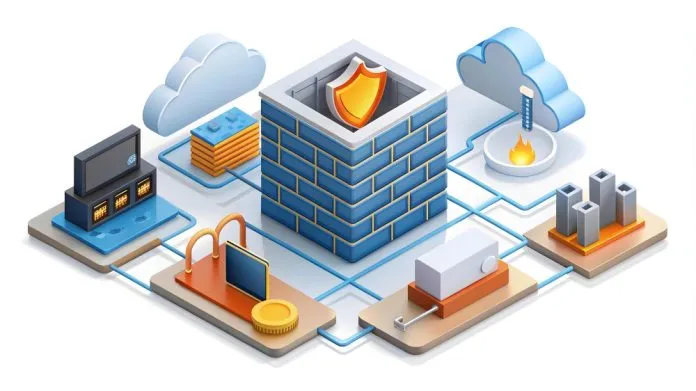
BinaxPay operates on a security-first cloud architecture designed to protect user data, financial transactions, government integrations, merchant operations, and multi-country financial infrastructure. Every layer, network, storage, compute, API, compliance, and identity, is hardened with enterprise-grade security controls. The architecture is built for zero-trust environments, continuous monitoring, encrypted communication, and complete regulatory alignment across all regions.
1. Zero-Trust Security Model
BinaxPay applies a strict zero-trust framework.
Principles:
- No implicit trust
- Identity verification on every request
- Device fingerprinting
- Continuous authentication
- Dynamic access rules
- Environment separation
Real example: A partner from Uganda logging in from a new device must pass additional security verification before accessing dashboards.
2. Fully Encrypted Data Storage and Communication
All data is encrypted end-to-end.
Capabilities:
- Encryption in transit (TLS 1.3)
- Encryption at rest (AES-256)
- Tokenized sensitive data
- Hashed identity fields
- Secure vault for secret and API key storage
Real example: User card metadata is tokenized; even internal staff cannot view full card details.
3. Multi-Region Cloud Infrastructure With Jurisdiction Control
Data is stored in compliance with regional laws.
Capabilities:
- EU data stored in EU zones
- UK data stored in UK zones
- US data stored in US zones
- Jurisdiction-specific isolation
- Automatic failover between zones
Real example: A French user’s data never leaves the EU region, ensuring GDPR compliance.
4. Microservice Isolation for Maximum Security
Each service, ledger, KYC, payouts, FX, cards, treasury, runs in a secure isolated microservice.
Benefits:
- No lateral movement
- Services cannot access each other without authorization
- Contained security breaches
- Simplified monitoring
Real example: A merchant module exploit cannot affect the ledger or treasury engine due to strict isolation.
5. API Gateway With Layered Security Controls
All external traffic flows through a hardened API gateway.
Security features:
- OAuth2 and JWT for authentication
- Rate limiting
- IP whitelisting
- Geo-fencing
- Device signature checks
- Threat detection
Real example: Suspicious login attempts from an unexpected region trigger an immediate block and admin notification.
6. Identity and Access Management (IAM) With Role Isolation
Access is strictly controlled for partners, merchants, staff, and institutions.
Capabilities:
- Role-based access
- Multi-factor authentication
- Privilege separation
- Approval workflows
- Temporary access tokens
- No permanent admin credentials
Real example: Support staff can view a user’s profile but cannot trigger payouts or modify treasury balances.
7. Continuous Threat Monitoring and Intrusion Detection
The platform is actively monitored 24/7.
Capabilities:
- Anomaly detection
- Intrusion prevention systems
- DDoS protection
- Behavioral threat analysis
- Automated alerts
- Real-time log streaming
Real example: If the system detects an unusual API spike, requests are rate-limited while alerts are sent to the security team.
8. Secure Development and Deployment Pipeline
Security is integrated into every stage of software development.
Features:
- Code scanning
- Dependency vulnerability checks
- Container security validation
- Automated security testing
- Restricted deployment approvals
Real example: Before deployment, any code touching the ledger must pass additional security review and automated test suites.
9. Redundancy and Secure Backup Architecture
Backups are encrypted and stored in multiple secure regions.
Capabilities:
- Automated backups
- Snapshot recovery
- Cold storage for critical data
- Disaster recovery playbooks
Real example: If a UK storage cluster becomes unavailable, encrypted replicas in EU and US regions restore automatically.
10. Compliance-Aligned Cloud Security
Infrastructure is built to align with international standards.
Aligned frameworks:
- GDPR
- ISO 27001
- PCI DSS principles
- Local data protection laws
- Financial regulatory requirements
- Sanctions and AML compliance frameworks
Real example: Sensitive documents uploaded during KYC are encrypted, flagged for access control, scanned for malware, and logged for auditing.
11. Application-Level Security With Multiple Protection Layers
Security is built directly into application logic.
Capabilities:
- Anti-fraud logic
- API misuse detection
- Session expiration
- CSRF protection
- Brute-force prevention
- Secure temporary session tokens
Real example: If a user enters incorrect login credentials multiple times, the system enforces temporary lockout and requires MFA verification.
12. Secure Logging and Audit Trails
Every action is recorded securely.
Capabilities:
- Tamper-proof logs
- Forensic-friendly audit records
- Ledger event logs
- Partner activity monitoring
- Government integration logs
Real example: Any attempt to modify user limits triggers an immutable audit entry visible to compliance officers.
Conclusion
BinaxPay’s secure cloud architecture delivers the highest standard of safety, reliability, and regulatory alignment across global financial operations. With multi-layer encryption, zero-trust models, jurisdictional data isolation, real-time monitoring, microservice isolation, and enterprise-grade IAM, the platform remains protected against emerging threats while maintaining continuous availability. This security foundation ensures trust for users, partners, merchants, governments, and institutions worldwide.